Medical Device Design & Development
We design, build and iterate medical devices, backed by measurements, user insight and documentation that stands up in review. Mechanical design is done in-house; electronics and firmware are subcontracted to specialists when a device needs them.
Where we help (at any stage)
New concepts that need realistic designs and fast iteration.
Prototypes that must become reliable, testable builds.
Existing designs that need performance, cost or manufacturability improvements.
Teams preparing for verification and design transfer.
Outcome: designs that work on the bench, make sense for users, and connect cleanly to verification and manufacturing.
The rugged autoinjector case study shows how this runs in practice, from first concept through to a submission, and if you are weighing up what to build first we have written up proof of concept versus prototype.
Capabilities
Mechanical
Mechanisms, housings, drive trains, seals and soft parts, tolerance stacks, material selection including silicones and engineering plastics, design for manufacture and assembly, drawing packs ready for suppliers.
Electronics and firmware
Subcontracted to specialist engineers when a device needs them, scoped, managed and documented by us within the project.
Human factors
Form studies, task analysis, formative sessions, usability risk linkage (IEC 62366).
Regulatory built in. ISO 14971 risk management kept live from the first concept, IEC 62366 usability work folded into prototype rounds, and design inputs and outputs recorded as they happen, so the technical file for UKCA or CE marking is largely written by design freeze.
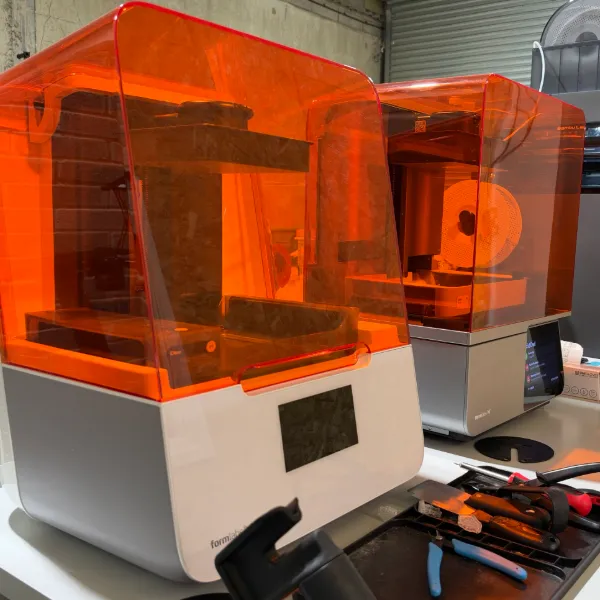
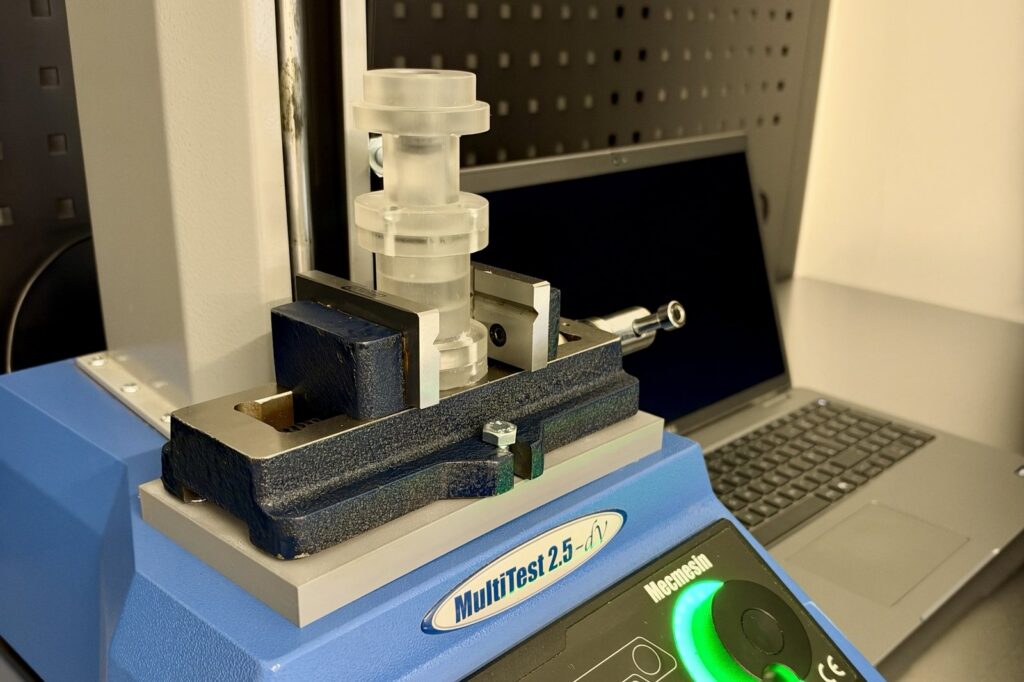
Prototyping and bench testing in-house. Resin and multi-material printing, laser cutting, turned parts, silicone moulding and vacuum casting, and force testing on a Mecmesin test frame, so each design decision is checked on a bench within days. See Rapid Prototyping and Proof of Concept.
How we run design
Architecture & risk
Define blocks, interfaces and constraints; keep ISO 14971 risk live and connected to decisions.
Build-measure loops
Design → fabricate → test → adjust; rigs and metrics that matter (force, flow, dose, repeatability).
User insight
Quick formative checks on handling, displays, controls, and maintenance tasks.
Evidence & documentation
Design inputs, decisions, traceability seed; what’s needed for verification later.
Design phases (pick where you need us)
Concept & feasibility – prove the mechanism and approach.
Prototype & iteration – reliable, testable builds with data.
Design for verification (DfV) – define characteristics and methods early.
Design transfer readiness – drawings, tolerances, materials, suppliers, QA hooks.
Recent projects
- HelloCath: concept development, silicone prototypes, full technical drawings and a mapped regulatory route for an early-stage venture.
- A foot offloading device taken from concept to manufacture in 14 months, through seven rounds of prototypes and two user trials.
You work directly with the engineer doing the design, not an account manager. Scope and cost are agreed in writing before each phase, as a fixed price or a monthly arrangement for longer programmes. We sign your NDA or send ours before you share anything, and everything we create, from CAD to test data, is assigned to you.
Deliverables
CAD and drawings (with versioning), simple BOM and spec sheets
PCB files/firmware where applicable; logging and test notes
Bench data and photos/video of runs
Design inputs and decision logs, traceability seed
A clear next-phase plan (verification or transfer)
FAQs
Rob, in the workshop near Bristol, with specialist subcontractors for electronics, firmware, metal CNC and accredited testing when needed. You will know who is doing what before you commit.
Either. We can own the design, work inside your design controls and repositories, or take one subsystem.
No. We subcontract them to specialist engineers and manage the work within the project, so you keep one point of responsibility.
Design inputs, risk and usability are kept live from day one and verification characteristics are defined early, so evidence flows into the technical file instead of being reconstructed for it.
Yes: tolerances, materials, drawing packs, supplier briefing and selection, and design transfer readiness as a phase of its own.
As standard, all outputs are client-owned; we can work in your repositories if preferred.
Released drawings and 3D models, bill of materials, specifications, inspection criteria, assembly instructions and the verification evidence that supports them.