
Class I is the lowest risk class under the UK Medical Devices Regulations 2002, and it covers a surprising amount of ground, from walking aids and wheelchairs through to reusable surgical instruments and quite a bit of standalone software. It is also the only class where you can take a device to the Great Britain market without an Approved Body ever looking at it, which is why people talk about Class I medical device self-certification. My view is that the name causes trouble. It gets read as a lighter version of the process, when what it actually means is that you carry out the conformity assessment yourself and you hold all of the evidence that would normally sit behind a certificate. The MHRA can ask to see that evidence at any point once the device is on the market, so the technical file needs to be in a state where you would be reasonably comfortable handing it over.
What counts as Class I in Great Britain
Classification in GB still runs under UK MDR 2002, which is based on the old EU directives rather than the EU MDR, and for Class I products that difference matters. Two examples come up regularly.
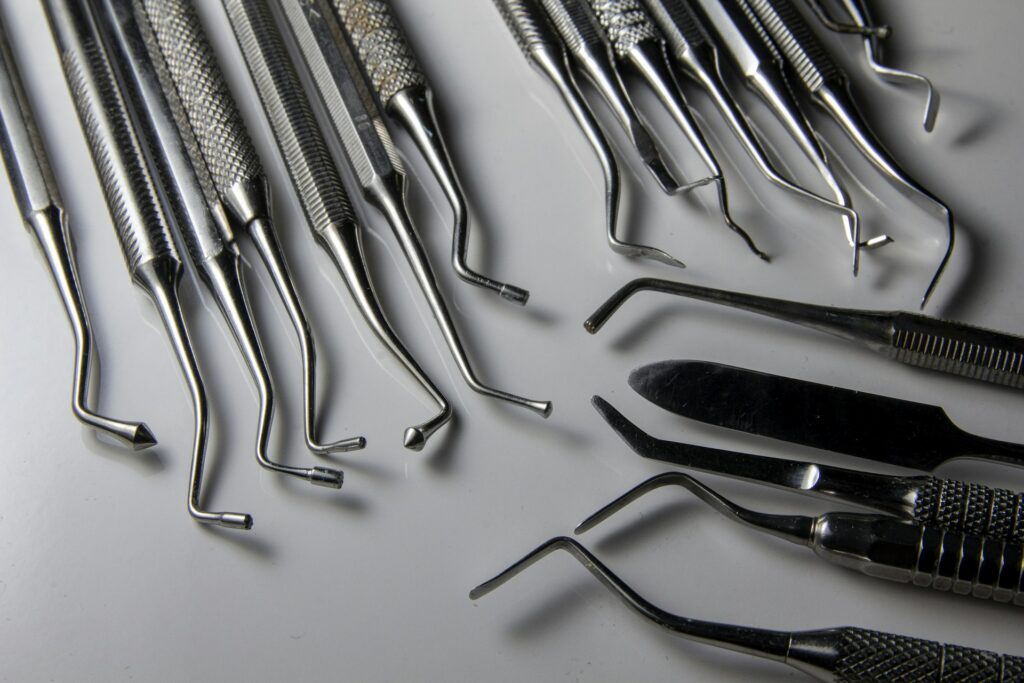
Reusable surgical instruments are ordinary Class I devices in GB. In the EU, the MDR created a special class for them (Class Ir) and manufacturers there need a notified body to review the aspects relating to reuse. There is no equivalent requirement in GB, so the self-certification route is still open to them here.
Standalone software is similar. The EU MDR pushed most software with a diagnostic or treatment purpose up to Class IIa or higher, whereas under the GB rules quite a bit of it still classifies as Class I. I wouldn’t count on that lasting forever, as the MHRA has signalled that classification is likely to move closer to the international position under the future regulations, but it is the position today.
The usual caveat applies, in that classification needs working through properly against the rules and the MHRA guidance rather than assumed from examples, and getting it wrong at the start undermines everything built on top of it.
What Class I medical device self-certification involves
For a plain Class I device (not sterile, no measuring function), the route looks like this:
- Confirm the classification against the UK MDR 2002 rules and write your reasoning down, because the justification belongs in the file.
- Show the device meets the relevant essential requirements, usually by testing against the designated standards where they exist and justifying any gaps.
- Run risk management to ISO 14971, and keep it live through design changes rather than writing it once at the end.
- Carry out a clinical evaluation. This one surprises people, but yes, Class I devices need one, even if for a well established device type it leans heavily on published literature and equivalence.
- Compile the technical documentation that holds all of the above together. I’ve written separately about what actually goes in a technical file, and the same structure applies here.
- Draw up and sign the declaration of conformity, affix the UKCA marking, and register the device with the MHRA before it is placed on the GB market. Registration is an online process with a small statutory fee per application.
The requirements are the same whether or not anyone checks them before launch. That is the part of self-certification I find people underestimate, because with no gate in the way it is tempting to launch on a thin file and tidy it up later, and later has a habit of arriving as a complaint or a tender question.
On the quality system side, ISO 13485 certification is not a requirement for Class I medical device self-certification. You do still need enough documented control to manufacture the device consistently and to run your post-market obligations, and if there is any realistic prospect of higher class devices or EU sales later, my advice is to set the QMS up properly early on. We cover that under ISO 13485 QMS setup.
The two exceptions that do need an Approved Body
Sterile Class I devices and Class I devices with a measuring function are the exceptions. For those, a UK Approved Body has to examine the aspects relating to sterility or metrology, though everything else about the device remains self-assessed. If your device is supplied sterile, that single word moves you into Approved Body territory, so it is worth deciding early whether sterile supply is actually necessary for the intended use, as a non-sterile presentation with cleaning instructions sometimes serves the clinical need perfectly well.
Why the technical file still needs to be complete
The declaration of conformity is a legal statement, signed by the manufacturer, that the device meets the essential requirements, and the technical file is the evidence behind that statement. In my experience it gets tested more often than people expect. The MHRA can request it following a complaint or as part of market surveillance, and distributors and tender processes often ask for parts of it. If you ever want to CE mark the same device for the EU you will be building on whatever GB file you have.
The post-market side has also tightened. The strengthened GB post-market surveillance requirements came into force on 16 June 2025 and they apply in full to Class I. You need a PMS system with a documented plan, a PMS report that is kept up to date, and serious incidents have to reach the MHRA within defined timescales, generally 15 days. A PMS plan is fairly hard to run without a proper file underneath it, because the plan has to trace back to the risks and the claims the file establishes.
We build technical files alongside the design work rather than after it, since documentation written retrospectively always takes more time and effort than documentation captured as the decisions are made. Our technical file service covers Class I self-certification files on exactly that basis.
CE or UKCA for a Class I device right now
If you already hold a valid CE marking for a Class I device under the EU MDR, GB will continue to accept it until 30 June 2030, so there is no immediate pressure to UKCA mark on top of it. Devices relying on directive-era certificates have an earlier date of 30 June 2028, though for a self-declared Class I device the EU MDR date is normally the one that applies. The MHRA ran a consultation on recognising CE marking indefinitely, which closed on 10 April 2026, and at the time of writing no outcome has been published, so those dates stand.
If GB is your first or main market, the UKCA route under UK MDR 2002 is available now and you control the timing, and for the classifications above where GB takes the more favourable view it can be the quicker way to a first launch. I’ve written a fuller comparison in UKCA vs CE marking in 2026.
The 2026 regulations are on their way
The MHRA published draft GB regulations in spring 2026 covering international reliance (recognising approvals from Australia, Canada and the USA), UDI requirements across all device classes, implant cards and updated essential requirements that sit much closer to the EU MDR. The current expectation is that they are made late in 2026 and start coming into force from around mid 2027, with transitional periods of up to three years for general medical devices. For a Class I manufacturer the practical reading is that the documentation bar is going up and UDI will eventually apply to your device. A file built properly now should carry across with reasonably modest updates.
Talk it through
If you’re weighing up a Class I launch, or you have a device on the market and you’re not sure the file behind it would stand a request from the MHRA, I’d be happy to have a call about it. Half an hour is usually enough to work out where you stand and what order to do things in. You can book a free 30 minute call here.
Frequently asked questions
Not usually. Class I medical device self-certification means the manufacturer carries out the conformity assessment itself. The exceptions are devices supplied sterile and devices with a measuring function, where a UK Approved Body examines the sterility or metrology aspects and everything else stays self-assessed.
Yes. The device must be registered with the MHRA before it is placed on the Great Britain market. It is an online process with a small statutory fee per application, and the registration needs keeping up to date as devices are added or changed.
Yes. For a well established device type the evaluation can lean heavily on published literature and equivalence rather than new clinical data, and it still needs to be written up, referenced and kept up to date in the technical file.
Yes. A Class I device with a valid CE marking under the EU MDR is accepted in GB until 30 June 2030. The MHRA consulted on recognising CE marking indefinitely, closing 10 April 2026, and no outcome had been published at the time of writing.