The client
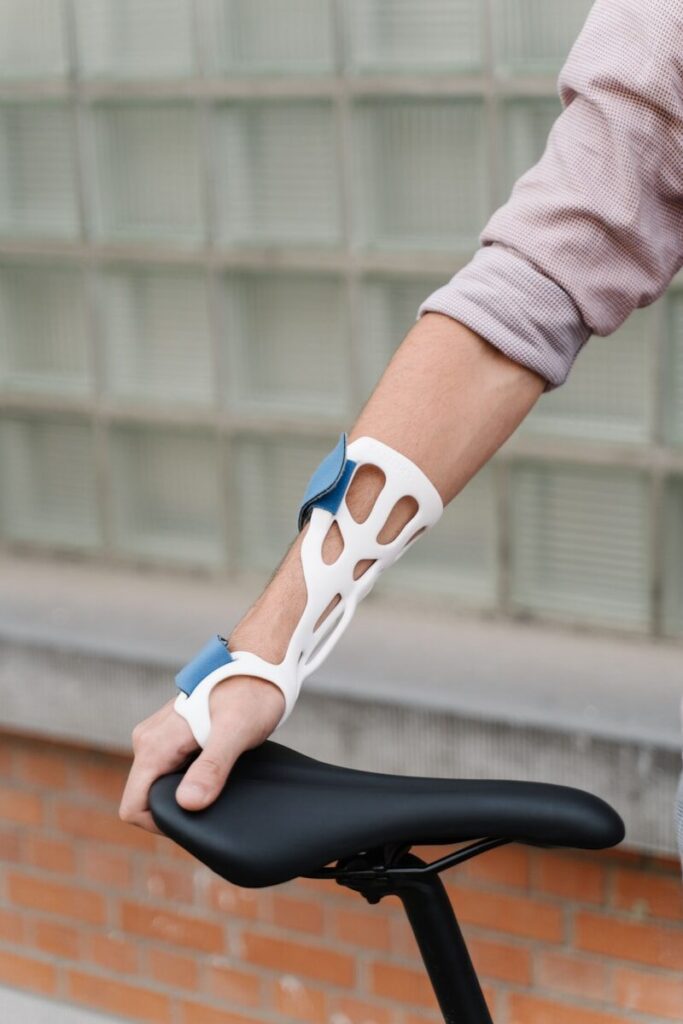
A UK company developing a custom-fit wearable support device, the sort of thing you’d reach for with a broken bone or a bad sprain. We’ve kept the client and the device details anonymous at their request.
The brief
The core question wasn’t “can we make one device”, it was “can we make one for anybody who walks through the door”. The whole proposition depended on a repeatable workflow: scan the person, design the device around them, and produce a functional custom-fit device at the end of it. Our job was to prove that workflow actually works, and to work out the regulatory route for a device that’s different for every patient.
What we did
We built and ran the workflow end to end as a proof of concept, from scanning a real person through to a functional device they could wear. Then we produced initial prototypes, refining the fit, the design steps in the middle, and the practical details that only show up when you actually make the thing rather than talk about it.
Custom-made and patient-matched devices sit in an awkward corner of the medical device regulations, and the right route isn’t obvious from the outside. We worked through the regulatory options with the client so the workflow we proved is one that can actually be taken to market, not just a nice demo.
Where it stands
The client now has a proven scan-to-device workflow, functional prototypes and a defined regulatory route, and they’re currently using that pack to raise their next round of funding.
If you’re weighing up a similar build, the proof-of-concept stage is nearly always where the money is best spent first. We do this work in-house near Bristol. Book a free call if you’d like to talk one through.